Tree Limbs on Power Lines: Who to Call in NE Oklahoma
When addressing tree on power line who to call in Northeast Oklahoma, prioritize immediate personal safety, check for downed power drops, and document all damage with clear photos before moving limbs. In Green Country, severe weather like tornadoes and ice storms places immense mechanical stress on oak, maple, and hackberry limbs. Calling an insured, technical tree service ensures dangerous spring-loaded branches are dismantled safely without compounding structural damage.
Understanding Tree Limbs on Power Lines: Who to Call in NE Oklahoma in Northeast Oklahoma
Oklahoma's climate creates unique hazards for urban and rural trees. Spring supercell thunderstorms bring straight-line winds surpassing 70 mph, while winter ice storms coat branches with hundreds of pounds of glaze ice. Species common to Green Country—such as silver maples, post oaks, water oaks, and invasive Bradford pears—each react differently to environmental stress. Understanding these dynamics is critical when navigating tree on power line who to call.
- Inspect the trunk base for fungal conks, mushrooms, or heaving soil indicating root plate failure.
- Check for co-dominant stems with included bark, which split easily in high wind.
- Ensure branches are clear of electric service lines running from the utility pole to your home weatherhead.
- Verify contractor insurance coverage (demand a certificate of general liability) before work begins.
Safety Protocols and Property Protection
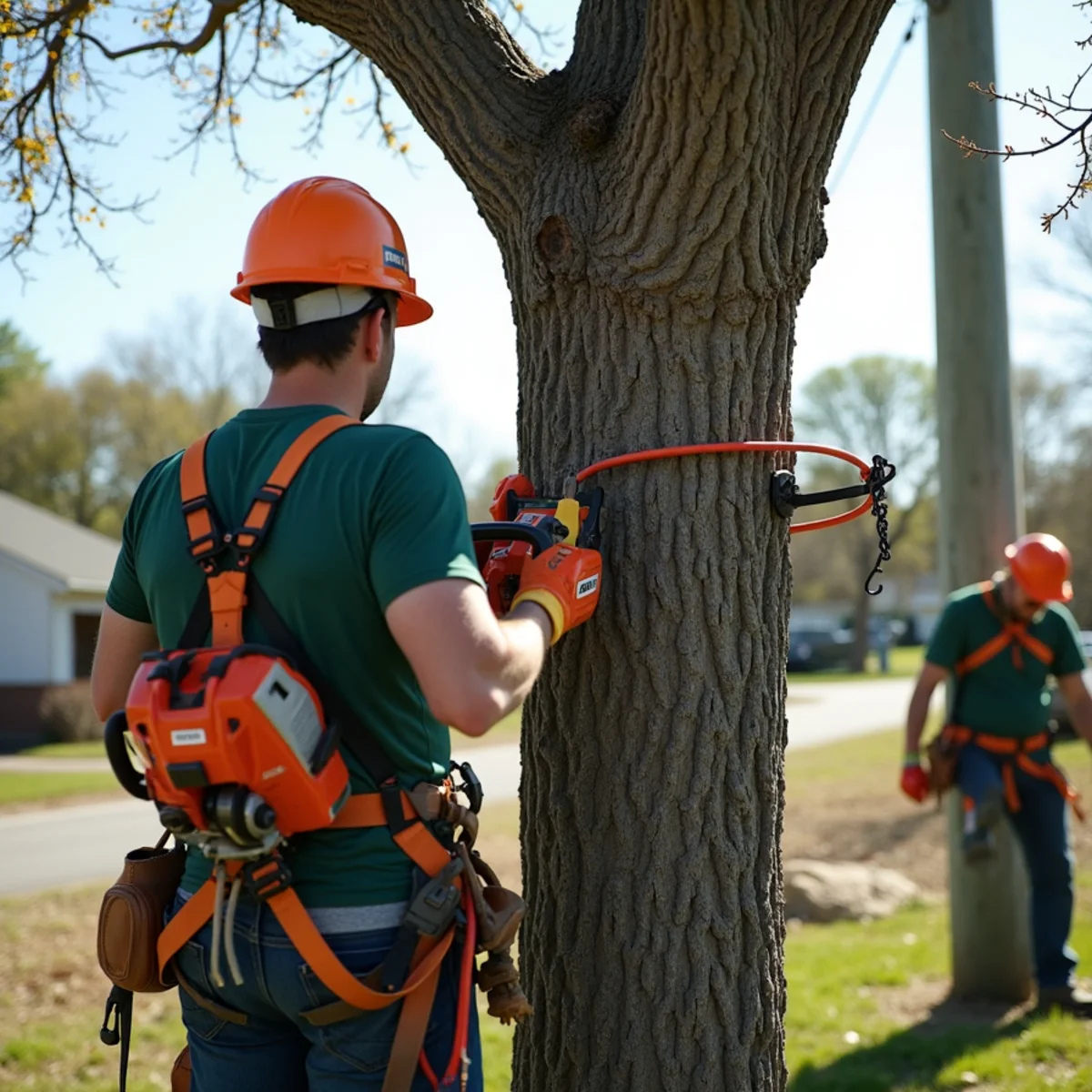
Attempting to tackle large tree hazards with a consumer chainsaw without proper rigging training is among the most dangerous homeowner tasks. Downed trees frequently store massive mechanical energy; cutting a trunk under tension can trigger violent spring-back. Professional tree crews use relief cuts, directional felling notches, and tagline control to dissipate energy safely.
Costs, Insurance, and Local Regulations
When dealing with tree on power line who to call, homeowners often ask about costs and insurance coverage. If a tree falls on a covered structure (such as your home, garage, or shed), homeowners insurance policies typically cover the cost of removing the tree from the structure and making temporary tarp repairs. For general tree trimming and maintenance, costs depend on tree height, accessibility, and debris haul-off.
| Factor | Typical Scope | Impact on Price & Safety |
|---|---|---|
| Tree Height & Diameter | Small (under 25ft) to Large (over 60ft) | Larger trees require advanced climbing or bucket access |
| Proximity to Structures | Clear lawn vs tight roofline proximity | Tight quarters require complex rope rigging and friction lowering |
| Power Line Proximity | Near service drop vs high voltage line | Requires coordination with PSO or rural electric cooperatives |
| Debris Clean & Haul | Leave firewood vs full chip & haul-off | Full debris haul-off and raking leaves property spotless |
Electric Utility vs. Homeowner Responsibility Matrix
Understanding which electric lines are maintained by regional utilities and which belong to the property owner is vital for prompt storm recovery across Northeast Oklahoma. Utility providers like Public Service Company of Oklahoma (PSO), the Grand River Dam Authority (GRDA), and local electric cooperatives (such as Northeast Oklahoma Electric Cooperative) maintain primary distribution corridors along public roads and easements. However, the private overhead service drop running from the street transformer to the weatherhead on your home is private property, meaning tree clearance is the homeowner's responsibility.
| Line Type | Voltage Class | Responsible Entity | Emergency Action |
|---|---|---|---|
| Primary Distribution | 7,200V - 13,800V | Electric Utility (PSO / GRDA / Co-op) | Call 911 & Power Company Immediately |
| Neutral Ground Wire | Ground Potential | Electric Utility | Keep 35-ft clearance; utility repair |
| Service Drop (Weatherhead) | 120V / 240V | Homeowner (Private Property) | Hire Insured Arborist (Joice Tree Service) |
| Telecom / Fiber Lines | Low Voltage / Optical | Phone / Cable Provider | Contact service provider for repair |
Technical Clearance Protocols for Private Service Drops
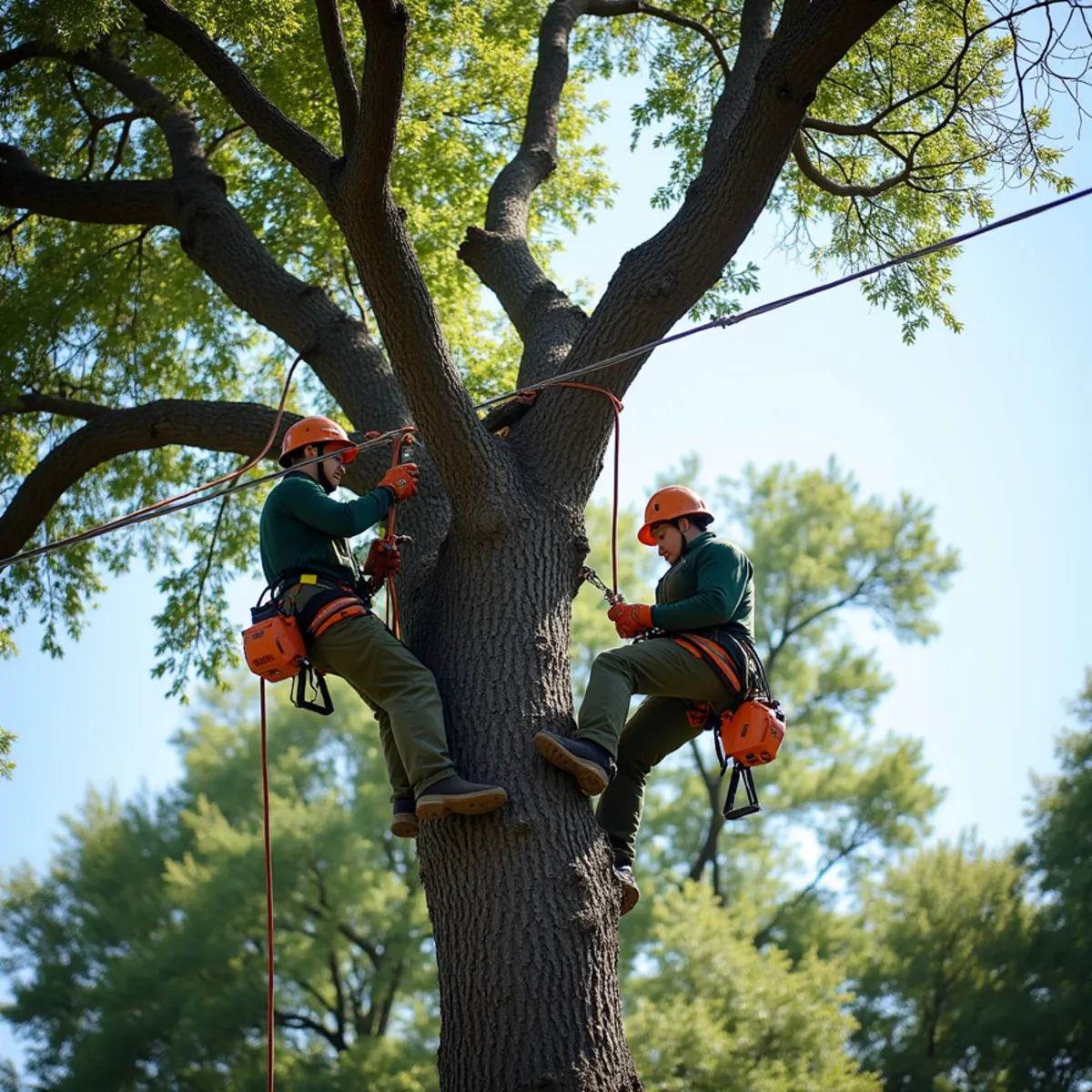
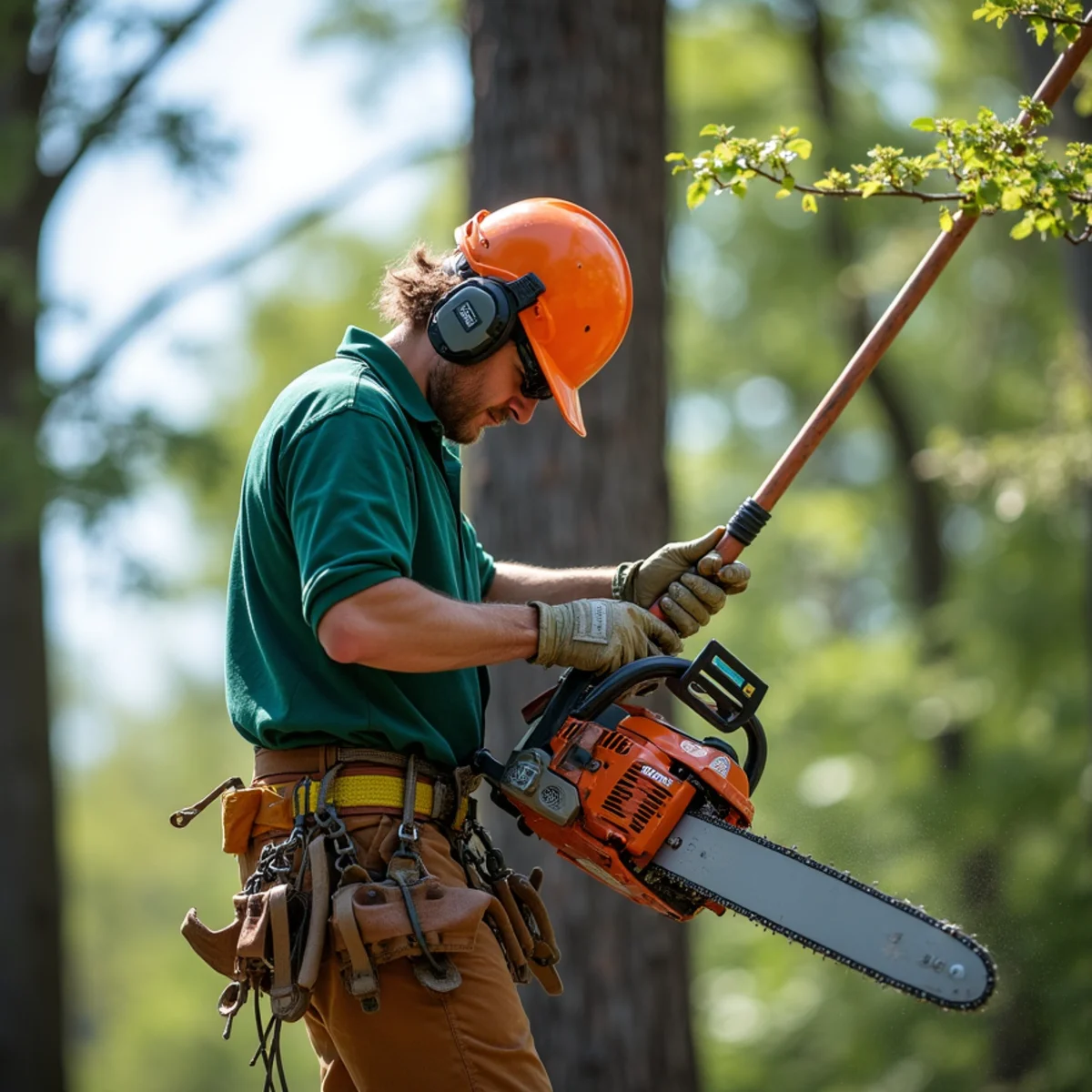
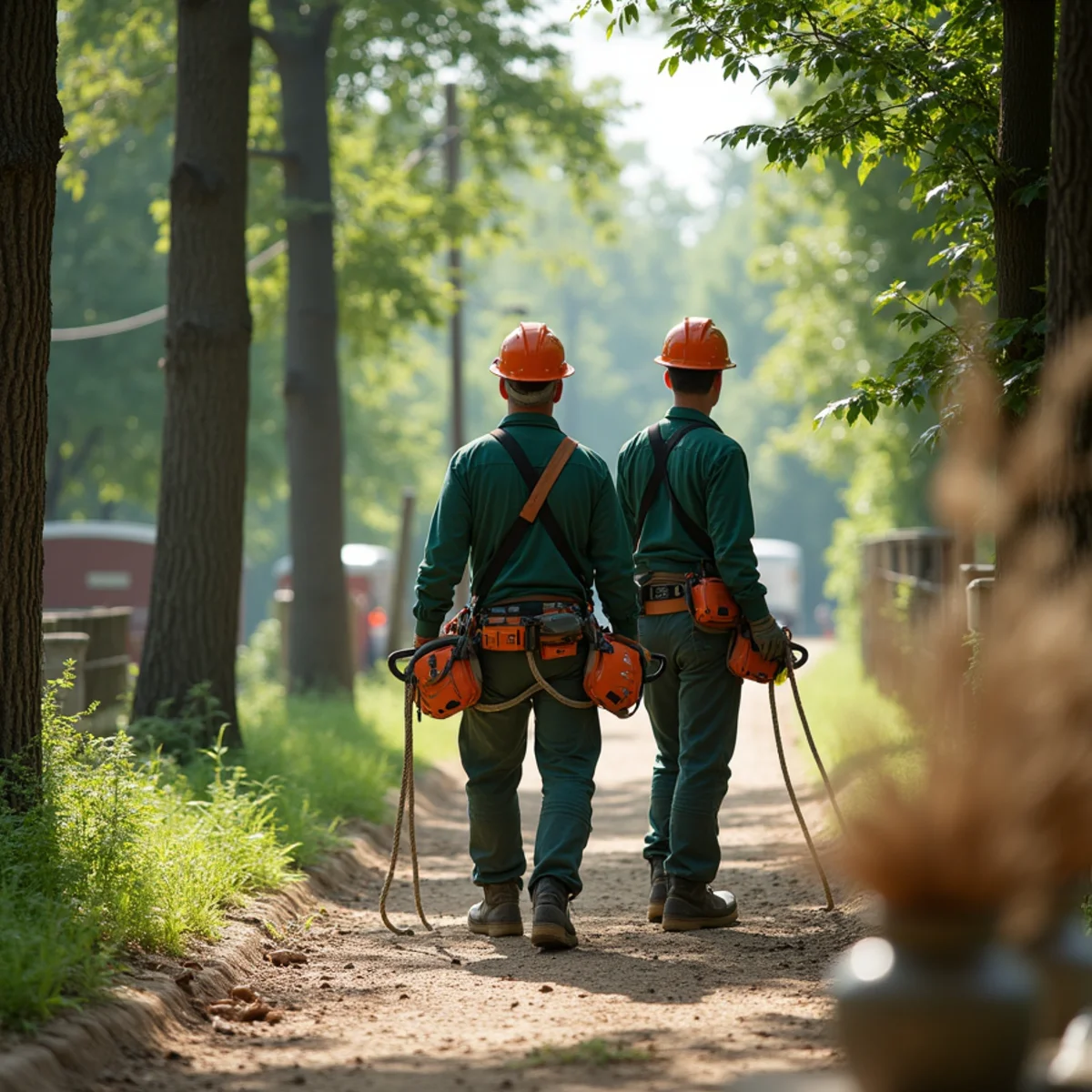
When trees or heavy branches fall across a private service drop, homeowner DIY cutting with chainsaws or metal ladders is lethal. Joice Tree Service utilizes dielectric non-conductive climbing lines and insulated fiberglass pole saws to dismantle limbs under rope control. Where limbs exert extreme mechanical tension on weatherheads, we coordinate with the local electric utility to temporarily drop the meter loop, allowing our climbers to sever and rope down the wood with zero electrical risk.
Austin Joice's Field Notes from the Canopy: High-Voltage Step Potential & Dielectric Rigging
Working around electric lines is the most unforgiving aspect of tree care. In Northeast Oklahoma, our heavy spring rains saturate soils, dramatically increasing ground conductivity around downed wires. Many people do not realize that electricity can flow outward through wet soil in concentric rings—a phenomenon known as step potential—capable of electrocuting someone walking 30 feet away from a downed wire. In our field operations, we treat every line as energized until the utility dispatcher explicitly confirms de-energization. For residential service drops, we utilize dielectric non-conductive climbing lines and fiberglass pole saws tested to 100,000 volts per foot. We also secure taglines with Port-a-Wrap friction brakes anchored far outside the electrical drop zone, ensuring our ground crew holds complete rope control without standing under hazardous conductors.
At Joice Tree Service, owner Austin Joice frequently encounters tree on power line who to call during storm recovery and hazardous removals. Trees subjected to Oklahoma's severe weather cycles often exhibit internal rot, hollow cavities, or weak branch unions that make DIY cutting extremely hazardous. Professional rigging with Port-a-Wrap friction devices and arborist blocks allows heavy sections to be lowered safely under tension.
Need Professional Tree Advice on Your Property?
Call Austin Joice at (213) 468-5153. We inspect your trees on site, explain which can be pruned and which require removal, and provide a free written estimate.
Frequently Asked Questions
First assess the situation from a safe distance. If electrical lines are involved, stay clear and contact your utility. Document damage with photos and call Joice Tree Service at (213) 468-5153 for an inspection.